
How a performance-based methane rebate system could work to create incentives for operators
A performance-based fiscal element (e.g. methane rebate fee) should be designed to make gas capture more profitable than flaring
Many oil and gas producing countries already have regulations, bans on routine flaring, or voluntary commitments. Yet global gas flaring and venting continue to rise (Figure 1). One challenge is ensuring compliance.
Figure 1
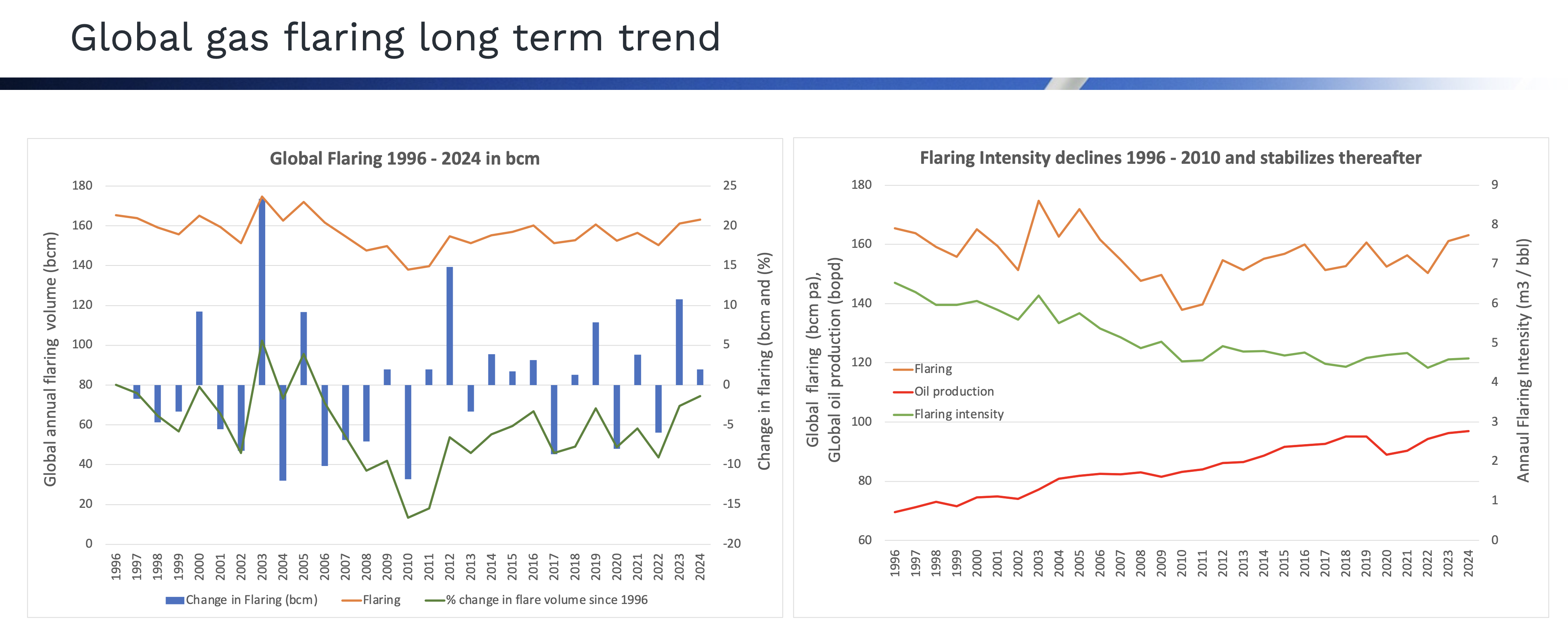
Source: EnergyCC analysis
A performance-based fiscal element (e.g. methane rebate fee) should be designed to make gas capture more profitable than flaring
The biggest fiscal upside comes from turning wasted gas into taxable economic activity whether for LNG sales, chemical feedstock, power generation, and gas re-injection, rather than relying only on penalties / fees. A methane rebate fee can be designed to incentivize operators to make the investments necessary to commercialize the wasted gas.
The fee must be high enough to change behaviour because repurposed gas has greater economic value than the fee itself. It must provide a ‘carrot’ and ‘stick’ to operators to reduce and repurpose emissions. The internal rate of return (IRR) of incremental gas developments can reach a marginal IRR, but a rebate fee can turn a marginal project into a profitable one.
Implementation of a performance-based emissions fee should be combined with measurement, transparency, and gas monetization. For example:
Tax revenues and penalties accrue to the government and, if properly calibrated, give incentives to companies to limit wasteful flaring. This video illustrates the process and the potential for moving this forward and details are given in this CGD blog and note.
Applying a methane rebate fee would enable companies to benefit from improved efficiency, increased profits, reduced tax liabilities, and lower emissions to help meet national and international commitments to end routine flaring. The performance-based fee rewards good quality operators, while those unable to control their emissions are ‘incentivized’ to reduce emissions or pay the price.
Enablers for implementation
Globally, the 8 per cent of natural gas wasted annually due to flaring and venting has a value of USD 124 billion per year at 2024 average international gas price (USD 9/MMBtu). The role of international organizations, including the International Monetary Fund (IMF), will be key in supporting governments to achieve more (fiscal) value from improved gas utilisation.
One suggestion is for the IMF to use its well-established processes to provide policy advice and technical assistance to support the adoption of a methane rebate fee. The IMF comments annually through its Article IV consultations on each country’s macroeconomic policies, including how to increase government revenues. Thus there is an established process to raise flaring and venting issues on the policy agenda in support of its 60+ oil and gas producer countries. CGD-EnergyCC’s larger proposed project seeks funding to create a primer for establishing effective win-win-win performance tax regimes for flaring.
Lessons from Brazil can point the way. Petrobras already measures emissions and links executive compensation to emissions performance. Brazil also has a strong regulatory framework. There is an opportunity for fiscal incentives to build on these foundations. Brazil aims to expand oil production to 5.4 million bpd by 2030, up from 4.3 million in 2023/2024. To meet Brazil’s NDC targets, it is important that this expansion is done responsibly with minimal methane emissions. Companies would be rewarded if they capture, use, sell, or transfer wasted gas into additional economic activity.
Share this article


Read Other Blogs
Sep 28, 2026 • Oil & Gas Industry
EnergyCC developed a four-point approach, combining: measurement, transparency, fiscal / regulatory measures, and gas monetisation to reduce emissions.
Sep 23, 2026 • Oil & Gas Industry
The CGD-EnergyCC project has published a Literature Review on the Health Impacts of Natural Gas Flaring in emerging market economies.
May 01, 2026 • Oil & Gas Industry
EnergyCC and CGD joint project conducted the preliminary scoping study on gas flaring and country trends
