
Solutions exist today: a comprehensive emissions reduction framework
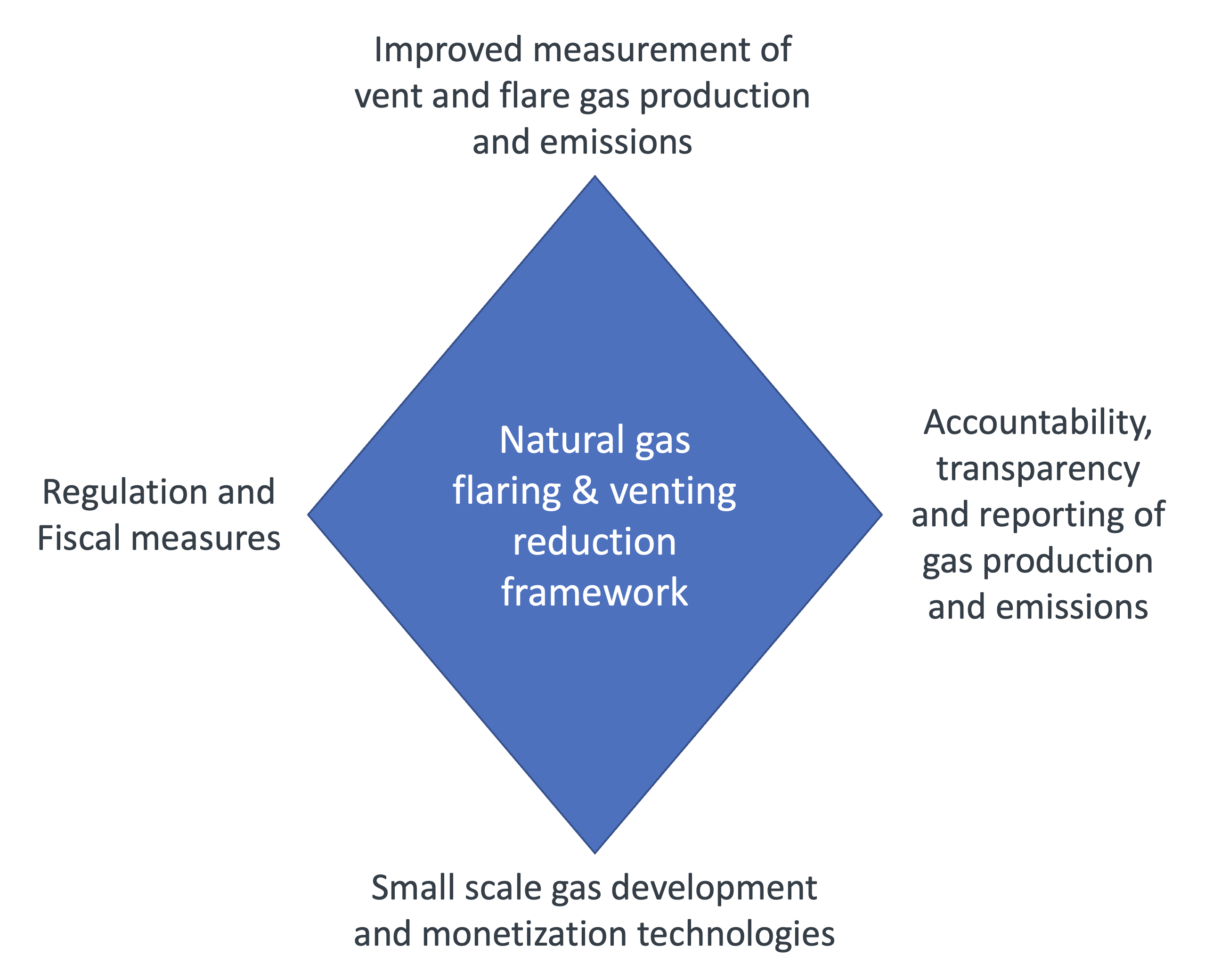
EnergyCC developed a four-point approach, combining: measurement, transparency, fiscal / regulatory measures, and gas monetisation to reduce emissions.
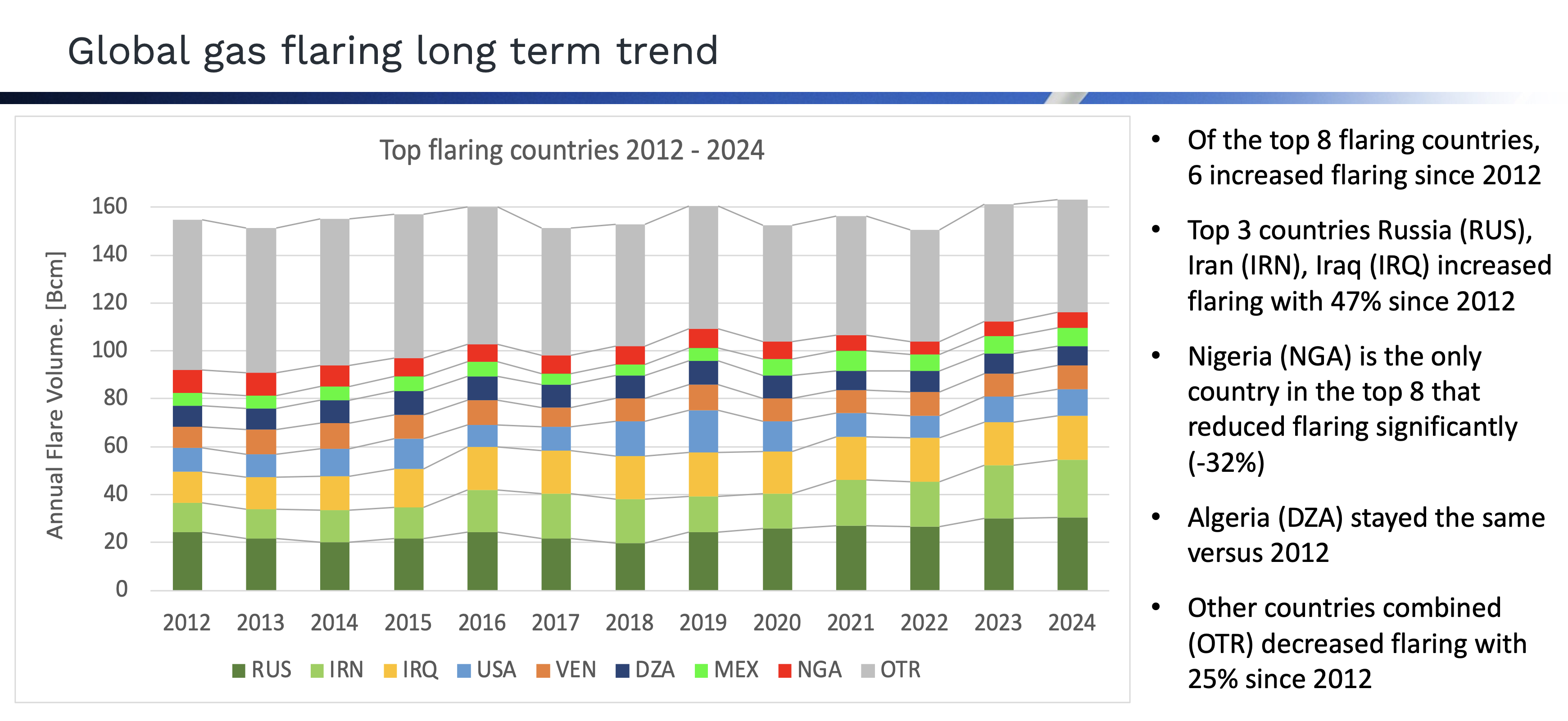
The World Bank’s Global Gas Flare Tracker 2025 concludes that flaring emissions have not declined over ten years and increased in both 2023 and in 2024 (Figure 1). It also finds that 21 of 28 jurisdictions ban routine flaring and venting and that 54 oil and gas producers have committed to end routine flaring. Technologies to reduce gas flaring and venting exist today.
Figure 1
Source: EnergyCC analysis
EnergyCC developed a four-point approach, combining: measurement, transparency, fiscal / regulatory measures, and gas monetisation (Figure 2) to reduce emissions.
Figure 2
This comprehensive emissions framework reduction model was applied to analyse performance of nine super-emitter flares in the Nigeria country case study (2012-2022).
Independent Measurement
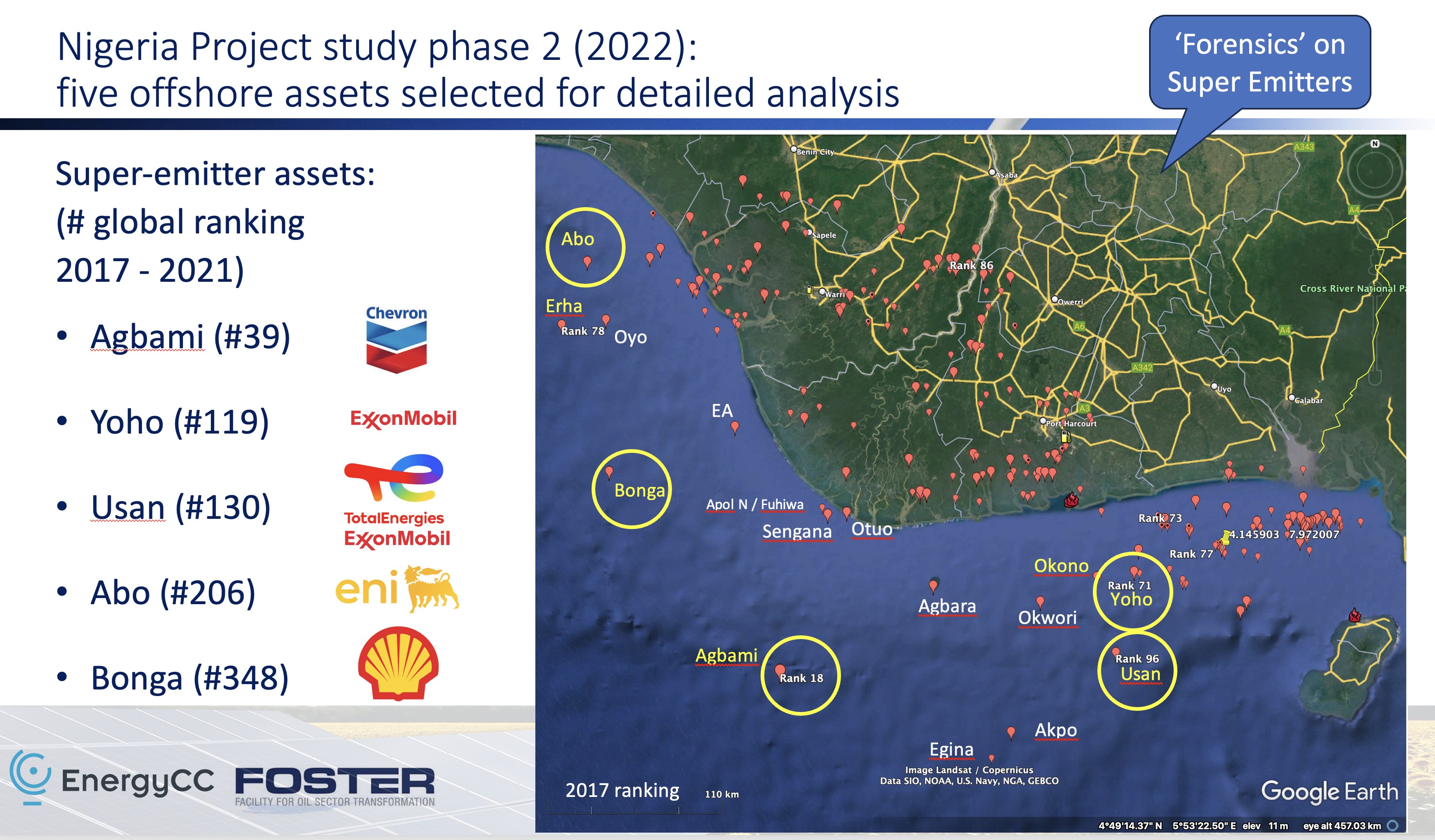
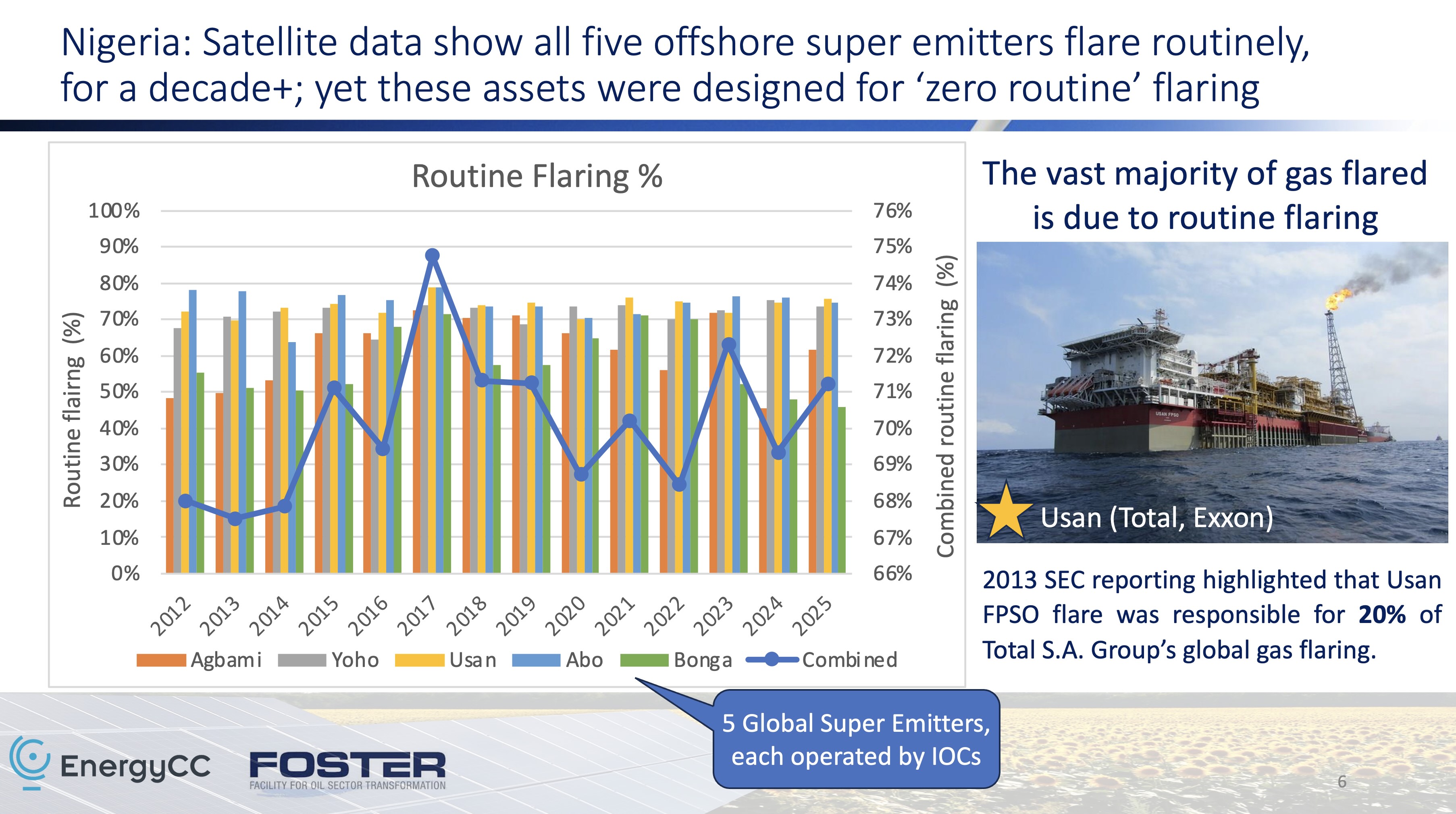
Many super-emitter flares are operated by international oil and gas companies (IOCs) (Figure 3). Measurement by satellite data helps manage emissions by providing transparency. This enables super-emitters to be identified, supports asset level accountability, and enables performance to be tracked over time. It shows operators are routinely flaring to produce oil, (Figure 4), a practice that would not be tolerated in many other regulatory regimes. Although these assets were designed for zero routine flaring and had invested in gas reinjection and gas monetization, each is flaring routinely and continuously at levels that define them as super-emitter flares.
Figure 3
Source: EnergyCC analysis
Figure 4
Source: EnergyCC analysis
Transparency and accountability
Civil society organizations build capacity and enforce corporate transparency and public accountability by verifying emissions, reporting on asset levels, and tracking revenue collection. Since 2022, the Natural Resource Governance Institute (NRGI) has been working to reduce methane emissions from the extractives sector in countries such as Nigeria, Senegal and Uganda. It supports the Nigeria Extractive Industries Transparency Initiative (NEITI) to develop a data disclosure template for oil and gas companies. It also provides training for civil society organizations and the media to monitor and advocate for methane reduction.
Gas Monetization
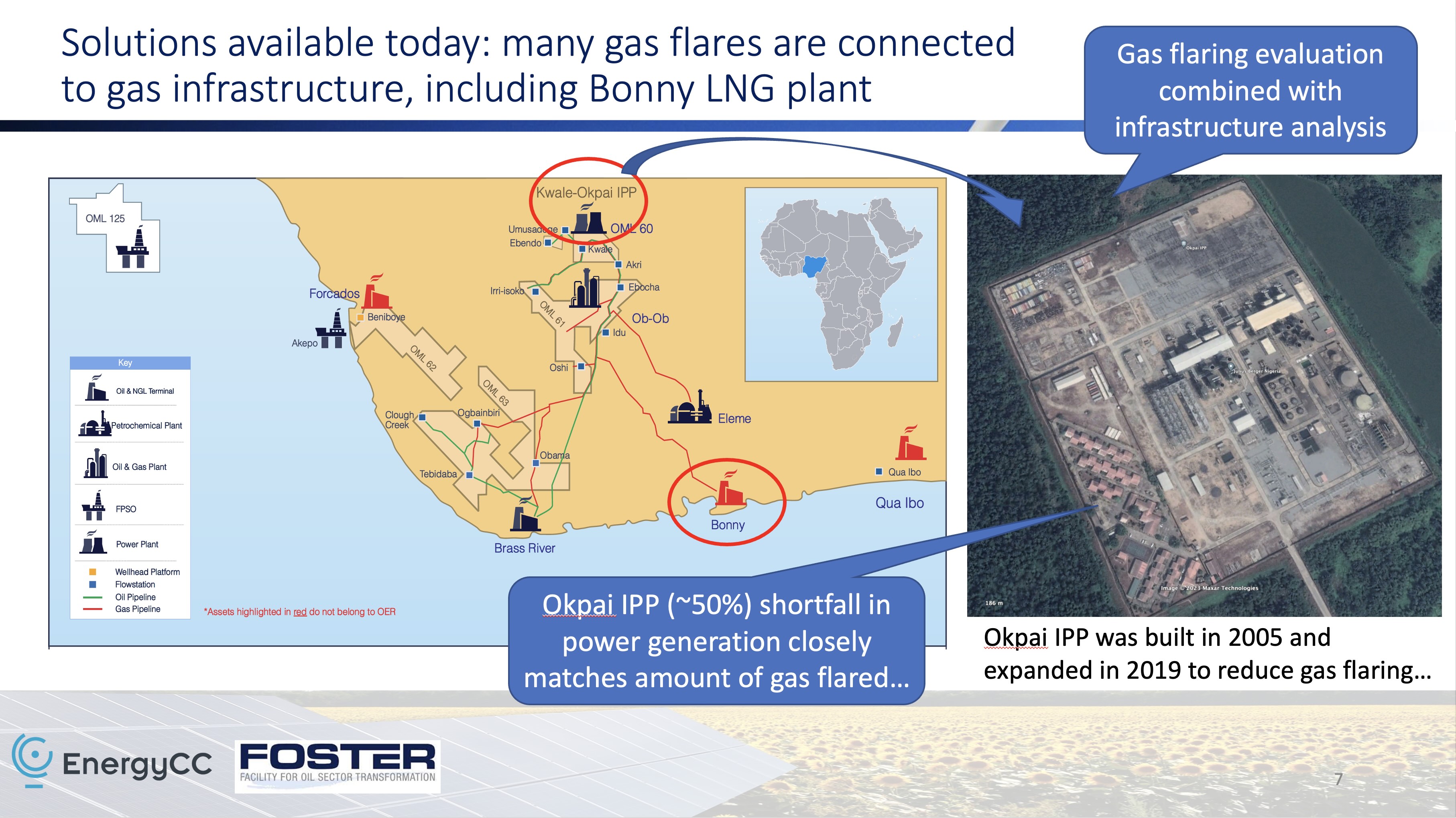
Local regulations and incentives are not yet aligned on gas monetization. Many gas flares are connected to gas monetization infrastructure, including the Bonny NLNG plant. Gas monetization of associated gas can require commercial and regulatory solutions to grant infrastructure access rights and/or the right to sell the gas. Both the Government of Nigeria and IOCs invested in gas monetization solutions before and after the offshore asset developments; yet only Bonga transfers produced gas onshore for monetization (Figure 5).
Figure 5
Source: EnergyCC analysis
Regulation and fiscal measures
The Nigeria country case studies (2012-2022) show that Nigeria has successfully implemented regulations, including a gas flare penalty, which was increased substantially in 2018. However, this may not be sufficient. The value of the wasted gas in potential gas sales is multiples higher than the penalties imposed. In 2022, total gas flare payments levied in Nigeria was USD 249 million. This compares with a potential gas sales value of USD 1.56 billion in 2024 based on a preliminary assessment in 2025 to update EnergyCC’s Nigeria country case studies. The onshore report of the same study also shows that small producing assets pay a much lower gas penalty fee than larger producing assets. Yet, Ebendo flow station, a marginal oil producer, ranks as the world’s 124th largest super-emitter flare in 2020, just behind the Abu Dhabi National Oil Company, (ADNOC) LNG mega project which is ranked 123rd, with the same flare rate. This demonstrates that marginal producers such as Ebendo can cause emissions that rank among the highest in the world.
Solutions to reduce and repurpose wasted gas require a combination of independent measurement, transparency, gas monetization, and fiscal measures, which can be the catalyst to reduced emissions.
Share this article


Read Other Blogs
Oct 01, 2026 • Oil & Gas Industry
A performance-based fiscal element (e.g. methane rebate fee) should be designed to make gas capture more profitable than flaring
Sep 23, 2026 • Oil & Gas Industry
The CGD-EnergyCC project has published a Literature Review on the Health Impacts of Natural Gas Flaring in emerging market economies.
May 01, 2026 • Oil & Gas Industry
EnergyCC and CGD joint project conducted the preliminary scoping study on gas flaring and country trends
